

Music possesses the extraordinary gift of anchoring memories in our collective consciousness. A single melody can capture the joy of a summer, accompany our deepest grief, or become the personal anthem of an entire generation. Yet, behind the brilliance of spotlights, thunderous applause, and the magnetism of fame, there often exists a shadowy realm where celebrity intersects with human vulnerability, obsessive behavior, and devastating violence.
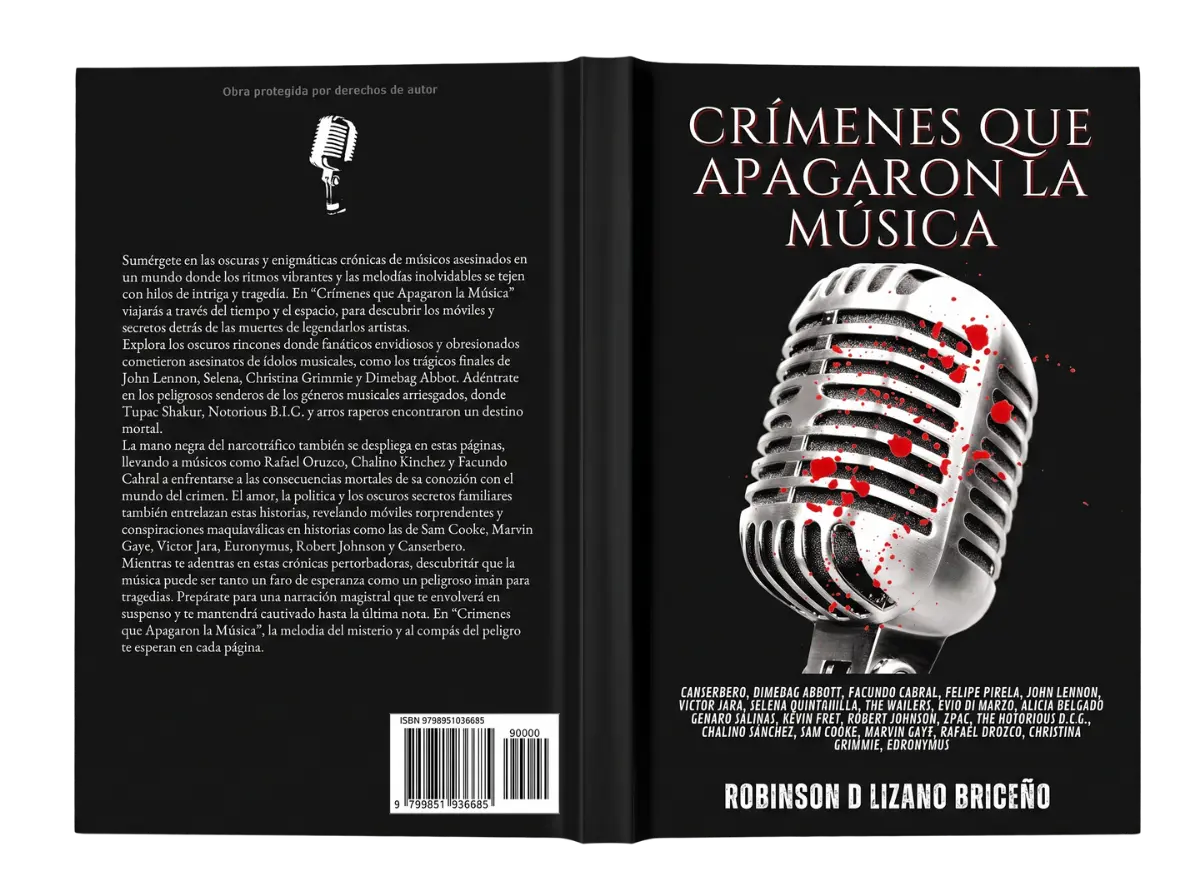
This complex and haunting territory is explored with remarkable craft by Venezuelan journalist, writer, and researcher Robinson Lizano in his book Crímenes que apagaron la música (Crimes That Silenced the Music). Far removed from sensationalist yellow journalism, this work delivers a series of rigorous investigations that uncover the police files, motives, and hidden secrets behind the deaths that permanently silenced legendary figures of world music.
The Insightful Voice of a Seasoned Chronicler
Addressing sensitive events without slipping into tabloid melodrama requires journalistic discipline honed over decades. Robinson Lizano brings more than thirty years of experience in investigative reporting, university teaching, and media leadership in Latin America. After serving as an assistant professor at Universidad Católica Andrés Bello in Caracas, where he trained generations of journalists, Lizano brought his scholarly vocation to the American Midwest.
He is currently pursuing doctoral studies in Latin American Cultural and Literary Studies at The Ohio State University and lives with his family in Marysville, Ohio, where he also engages in community work as an educator and advocate for Spanish language reading. That dual perspective of seasoned reporter and academic researcher is felt in every chapter: he never settles for merely recounting the fatal gunshot or assault, but meticulously reconstructs the social climate, music industry pressures, and the human psychology of everyone involved.
«Music can be a radiant beacon of hope, but it can also become a dangerous magnet for tragedy when it collides with greed, fanaticism, or societal breakdown.»
From Ecstasy to Obsession: When Fanaticism Pulls the Trigger
One of the most chilling chapters of the book examines crimes committed by obsessed fans. Lizano revisits the murder of John Lennon outside the Dakota Building in New York by Mark David Chapman in 1980, as well as the heartbreaking loss of Selena Quintanilla in Texas in 1995 at the hands of her fan club president. The book also covers modern tragedies such as young singer Christina Grimmie, shot in Orlando in 2016 following a meet-and-greet session with fans.
For readers in Ohio, this section carries an intensely personal resonance. The book recounts the tragic night of December 8, 2004, at the Alrosa Villa nightclub in Columbus, Ohio, when an armed gunman stormed the stage and killed Dimebag Darrell (Darrell Abbott), the iconic guitar player of Pantera and Damageplan, along with three other victims. Lizano recounts the shock and sorrow of that Columbus venue with deep dignity, turning the tragedy into a thoughtful reflection on artist safety and gun violence.
Urban Rivalries, Cartel Shadows, and Political Violence
The volume goes well beyond fan crimes, illustrating how distinct musical movements have become ensnared in cycles of conflict and organized crime.
In American hip hop, Lizano examines the unsolved drive-by murders of Tupac Shakur in Las Vegas (1996) and The Notorious B.I.G. in Los Angeles (1997), watershed moments that exposed deadly friction between rival record labels and street culture. In Latin America, the dark reach of cartels is traced through Chalino Sánchez, the Mexican corrido king executed in Sinaloa hours after receiving a chilling death note onstage, and Rafael Orozco, the golden voice of Colombian vallenato group Binomio de Oro, gunned down in Barranquilla amidst intricate romantic and underworld rivalries.
Alongside these chronicles stand stories where state repression and intolerance cut lives short, such as the torture and assassination of folk icon Víctor Jara in Chile’s National Stadium following the 1973 coup, and the 2011 Guatemala ambush that claimed the life of beloved Argentine poet and singer Facundo Cabral. Readers will also encounter intimate family tragedies and enduring mysteries, from Marvin Gaye’s fatal shooting by his own father to the poisoned whiskey lore surrounding delta blues pioneer Robert Johnson, the murder of Euronymous in Norway’s black metal scene, and the contested case of Venezuelan rapper Canserbero (Tirone González), an investigation where Lizano has provided substantial journalistic clarity.
An Essential Read for Lovers of Music and Investigative Journalism
What makes this book such a compelling read is the clarity and pace of its storytelling. Despite the somber nature of its subjects, Lizano writes with an engaging, rhythmic narrative that weaves judicial facts and cultural context together seamlessly. It is a book designed equally for music enthusiasts, true crime readers, and admirers of high-caliber literary non-fiction.
Closing this book leaves one with an enduring realization: violence may cut lives short and silence microphones, but it can never erase the artistic legacy of those who turned vulnerability and passion into timeless songs.
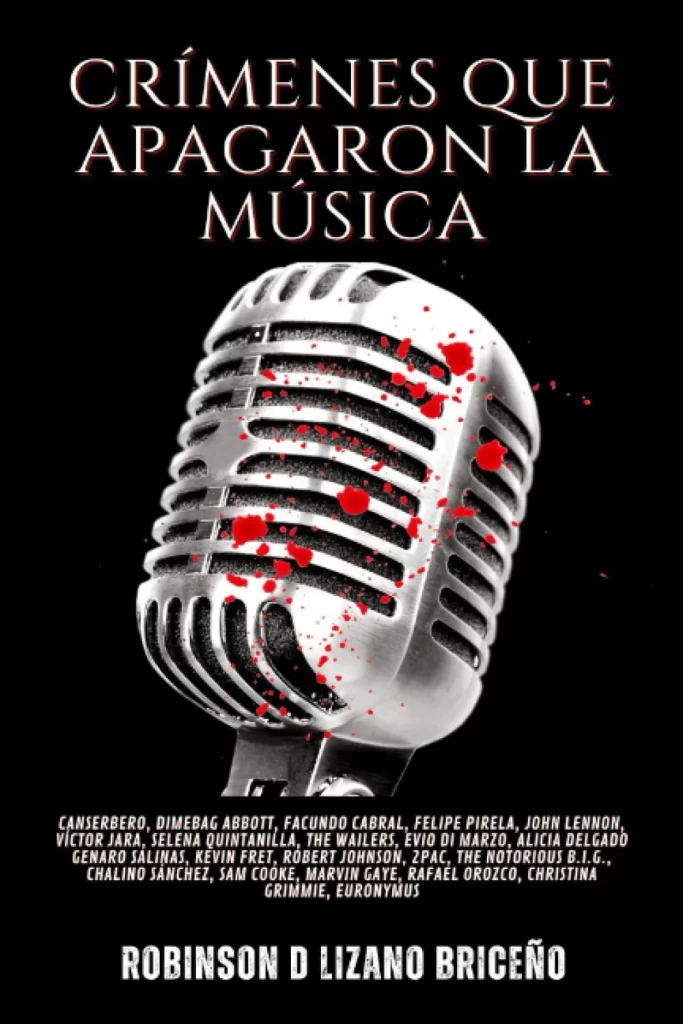
Crímenes que apagaron la música
Author: Robinson Lizano | Creative non-fiction, investigative journalism, and cultural chronicle. Explore full book details on our website or get your copy on Amazon and select bookstores including The Book Loft in German Village (Columbus, Ohio).