I share with you a work built from practical experience, legal reflection and deep observation of the drug phenomenon within the penal system.
This analysis is born from the conviction that the Law must be an instrument of justice and not of uncertainty.
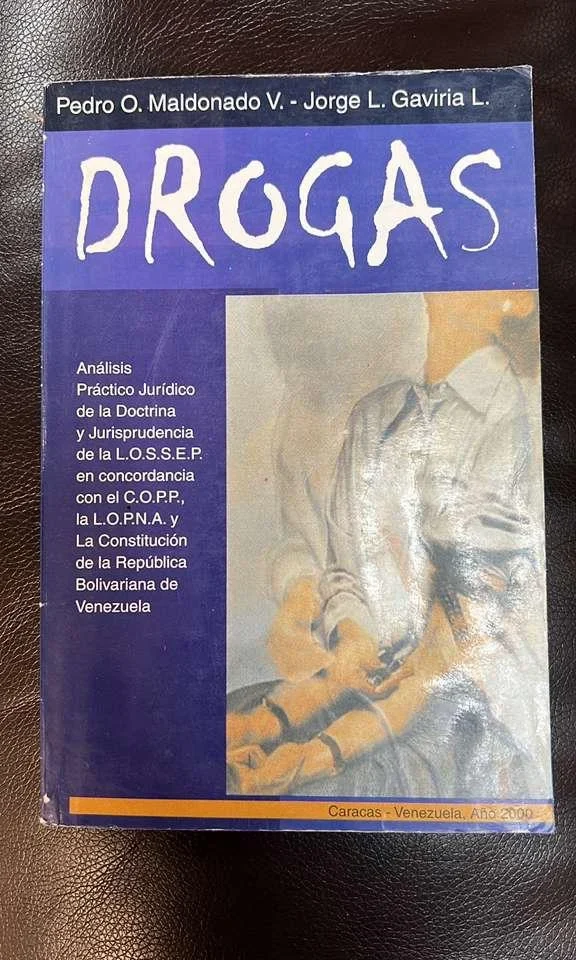
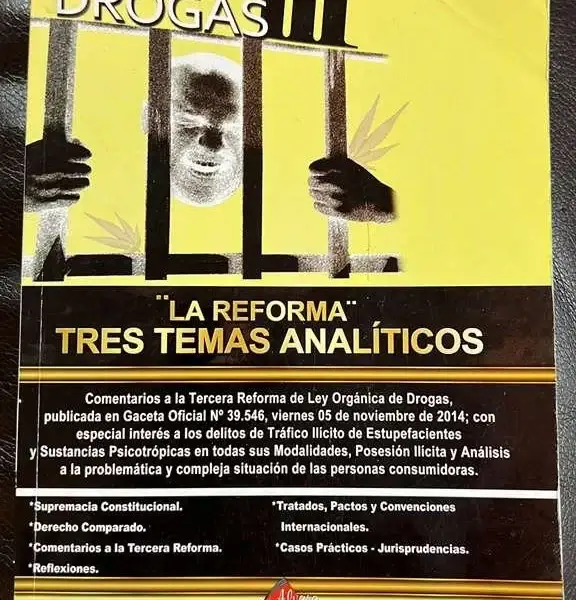
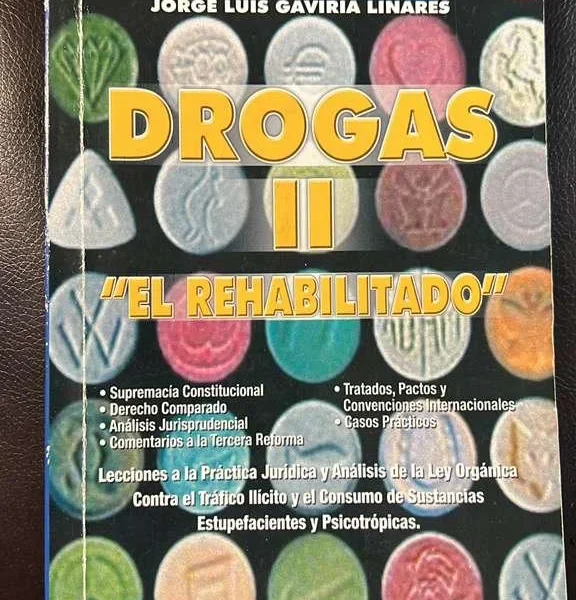
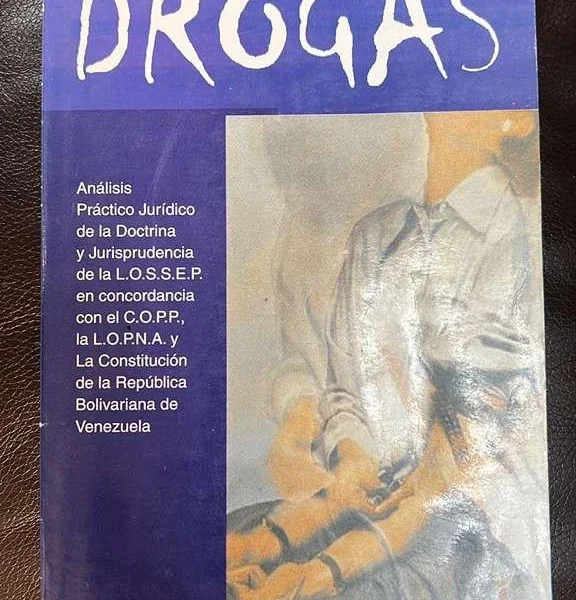
The motivation that led me to write Drugs: Analysis of Crime, Jurisprudence and Annotations on Law Reform arises from a professional concern that has grown over the years of service: to thoroughly understand how criminal law responds and should respond to realities as complex as those posed by the drug phenomenon.
For decades, I have seen how justice operators, students and colleagues face the same question: is the criminal law prepared to deal with such a multifaceted problem without sacrificing fundamental principles of law?
This work is my answer to that question, built with the intention of providing light, order and perspective to the legal analysis on this topic.
Throughout these pages you will not find a sensational or simplistic discourse.
Rather, I offer you an intellectual journey that starts from the normative to reach the interpretive, and from there towards a critical and propositional stance.
I wanted to explore the crime linked to drugs not as a social stigma, but as a phenomenon that deserves to be examined from the norm, from jurisprudence and from the practical reality that we face every day in courts and offices.
My approach is aware that criminal law is a delicate instrument: powerful in its scope, but susceptible to injustice when applied without consideration. Therefore, one of the main axes of this book is the jurisprudential review.
It is not just about citing rulings: I have sought to understand how and why courts have adopted certain criteria to interpret the law, what approaches have prevailed, and what consequences these interpretations have had on judicial practice.
This part of the text is designed to offer a guide that accompanies the professional in understanding and arguing the law, at the same time as providing elements of judgment for academic reflection.
Beyond the fractal analyzes of judicial criteria, I dedicate a significant section of this work to notes on legal reform. In my career, I have observed that regulatory reform cannot be an automatic or hasty exercise; It must be based on principles of proportionality, respect for human rights and internal coherence.
Therefore, in these notes I not only describe the proposed or implemented reforms, but I subject them to critical scrutiny that seeks to highlight their virtues and expose their limitations, always with a vision oriented towards the real impact on the administration of justice.
Another aspect that has been central to me during the writing of this book is understanding the legal phenomenon of drugs not as a watertight compartment, but as a point of confluence between the theory of crime, the criminal process, criminal policy and human dignity.
These elements, intertwined, allow me to offer a discourse that not only describes, but also proposes: how can Criminal Law function as an effective regulatory mechanism without losing sight of the guiding principles that make it justice?
The work is written with the intention of being useful. Nothing here is free.
Each concept, each failure analyzed, each reform proposal, has been carefully selected to help the reader clearly understand the complexity of applying the law in real contexts, where the norm meets people’s lives.
I have sought a style that balances technical rigor with clear and accessible exposition.
This does not mean simplifying the content, but rather making it intelligible without loss of legal precision. Through examples, analysis and jurisprudential references, the reader will find a work that can accompany both academic training and daily practice.
By sharing this book, my intention is also to open a space for dialogue.
The phenomenon of drugs, its regulation, its social impact and its criminal treatment are issues that require informed discussion, critical debate and constant reflection. This text is not intended to be the last word, but rather an invitation to think rigorously, with responsibility and with humanity.
Finally, I confess that this editorial project has been, for me, an exercise in commitment to justice, to rigorous legal thinking and to those who, from different roles, seek to deeply understand how Law can be a tool of social order and equity.
This book is part of that commitment. And it is my hope that, as you read it, you will find it as useful as I found writing it.











 https://rss.com/podcasts/bitacora-literaria/