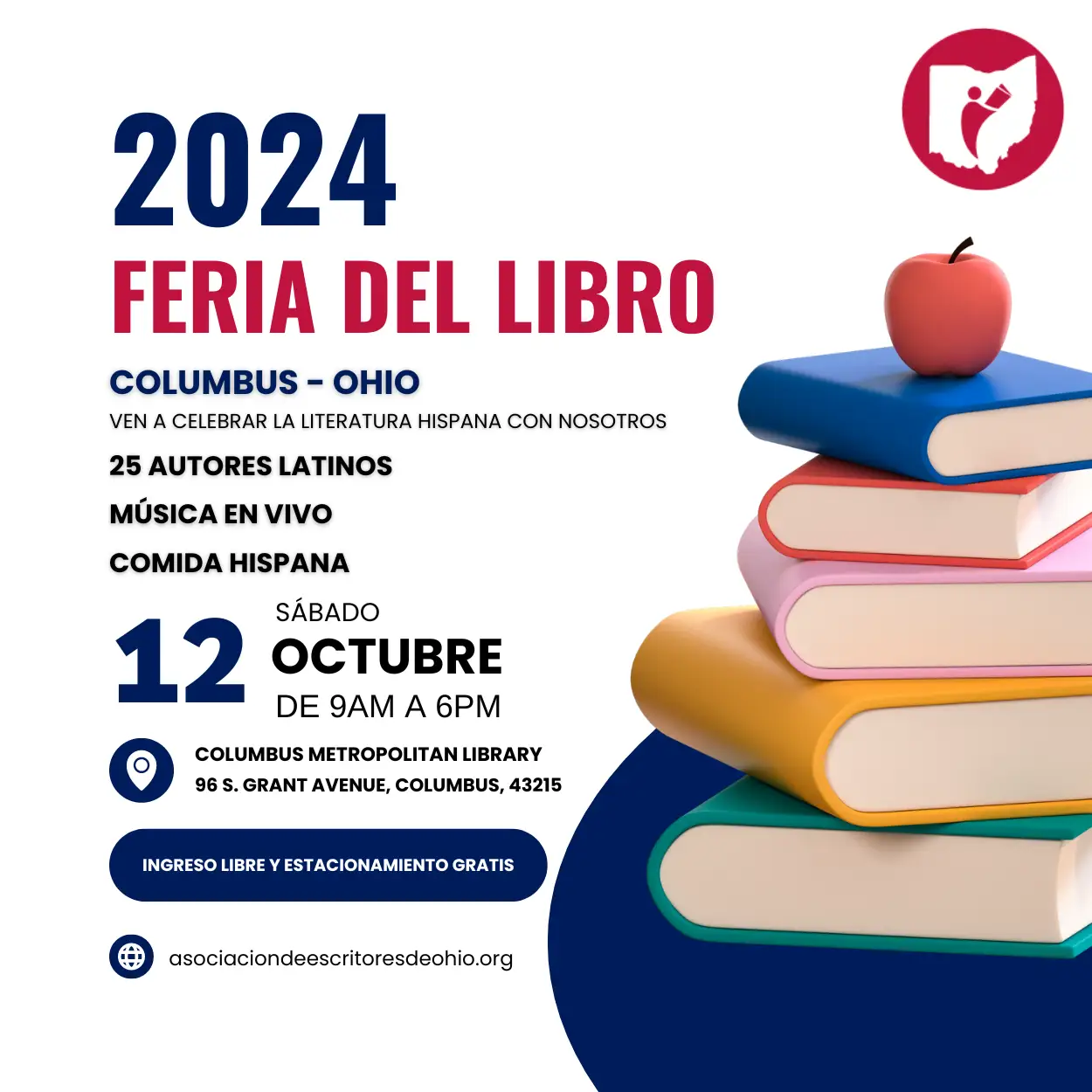
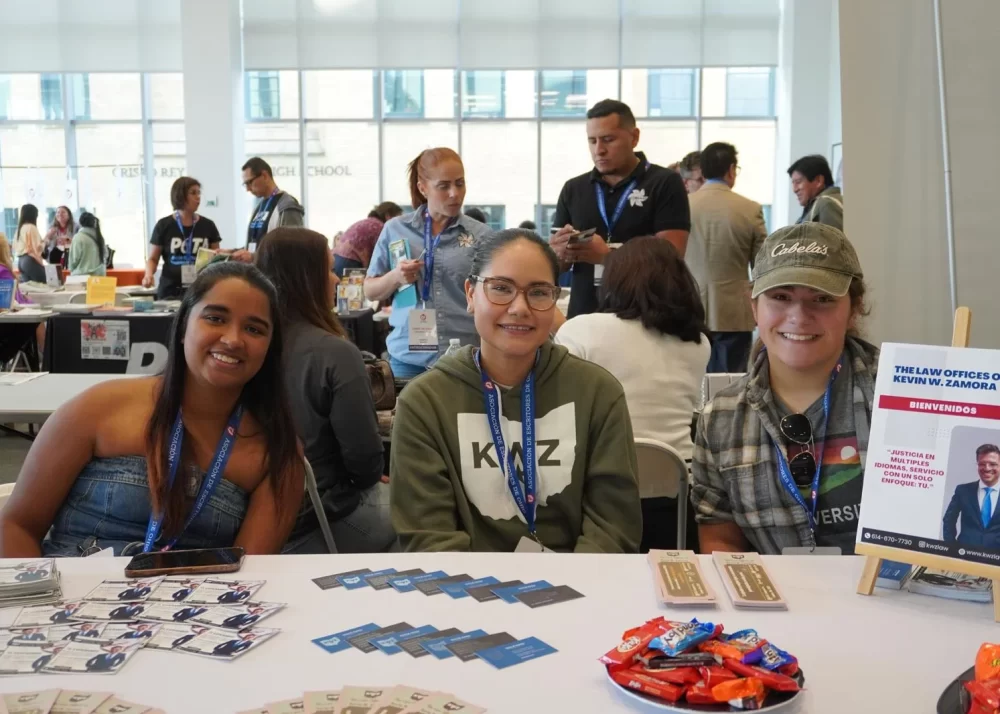
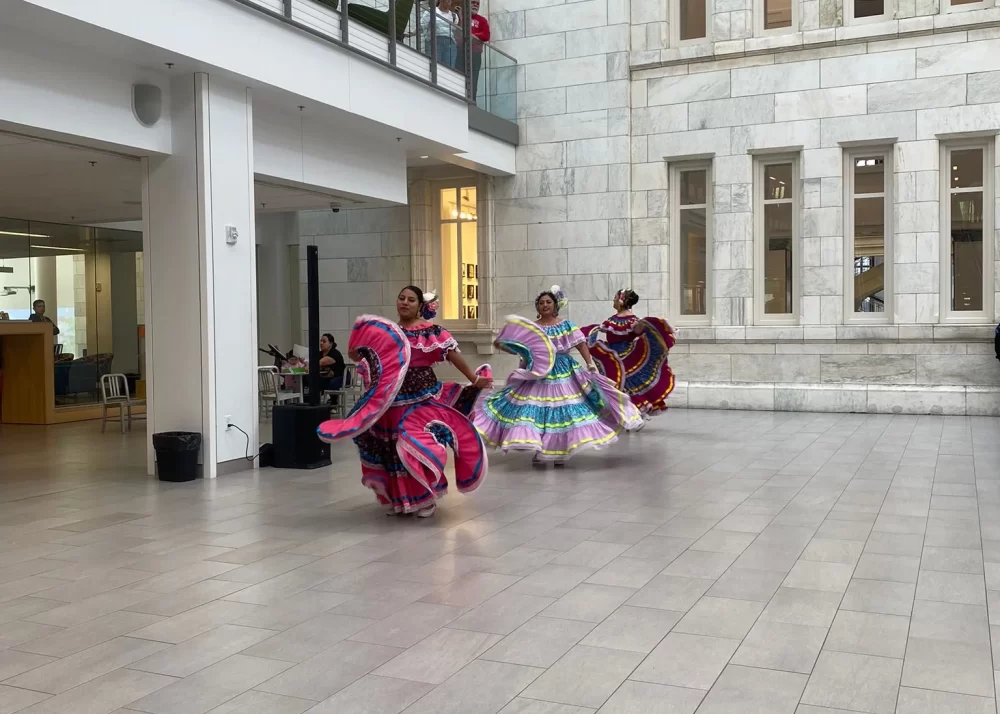
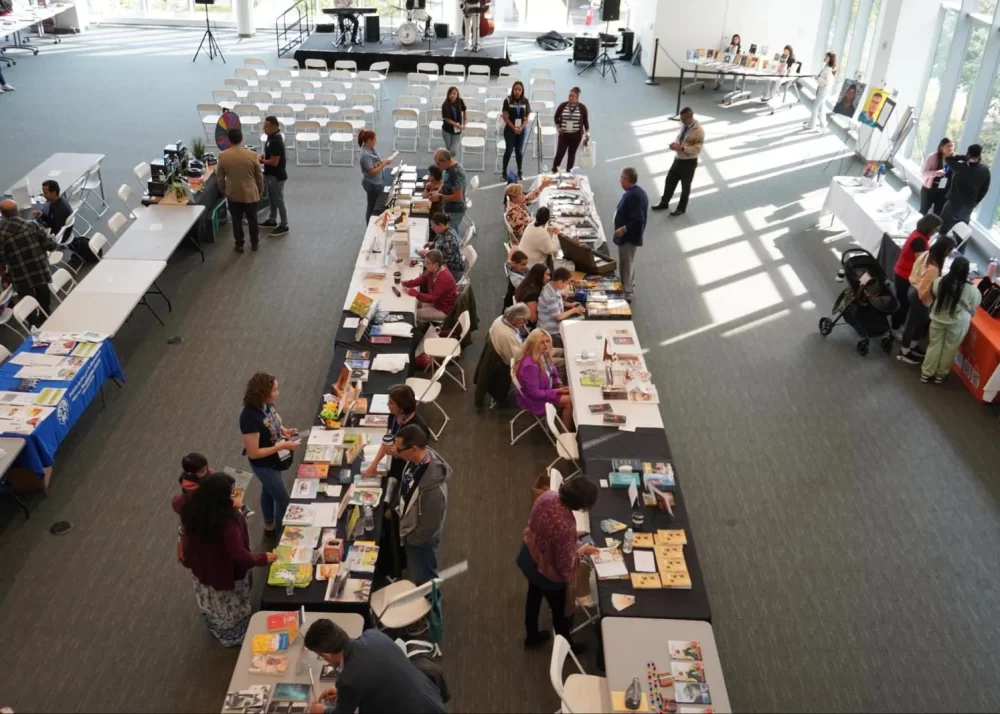
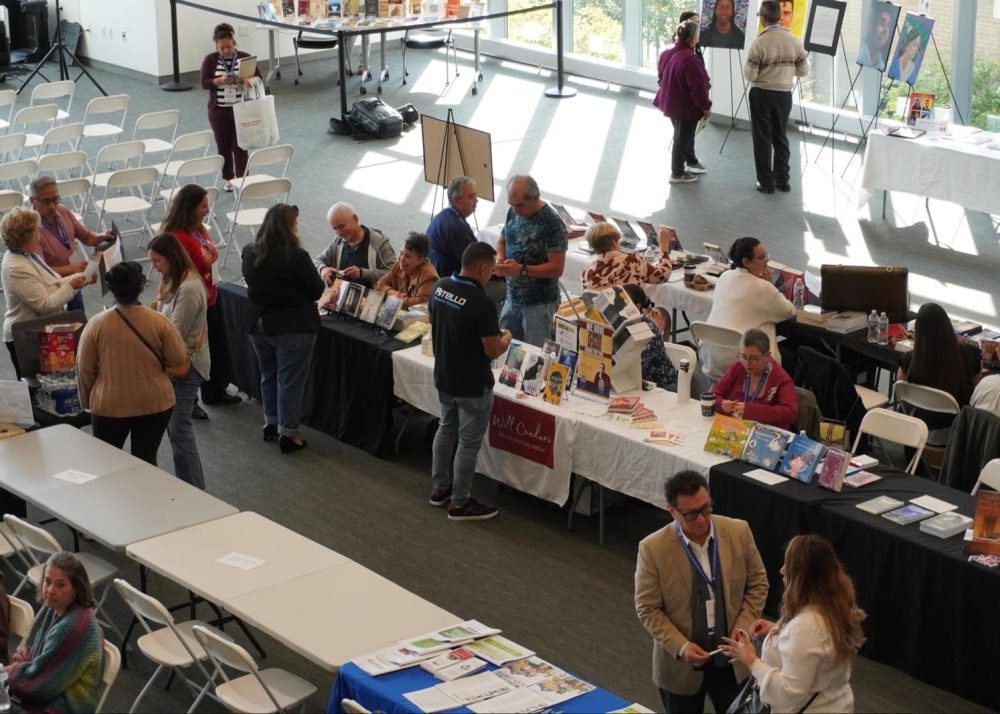
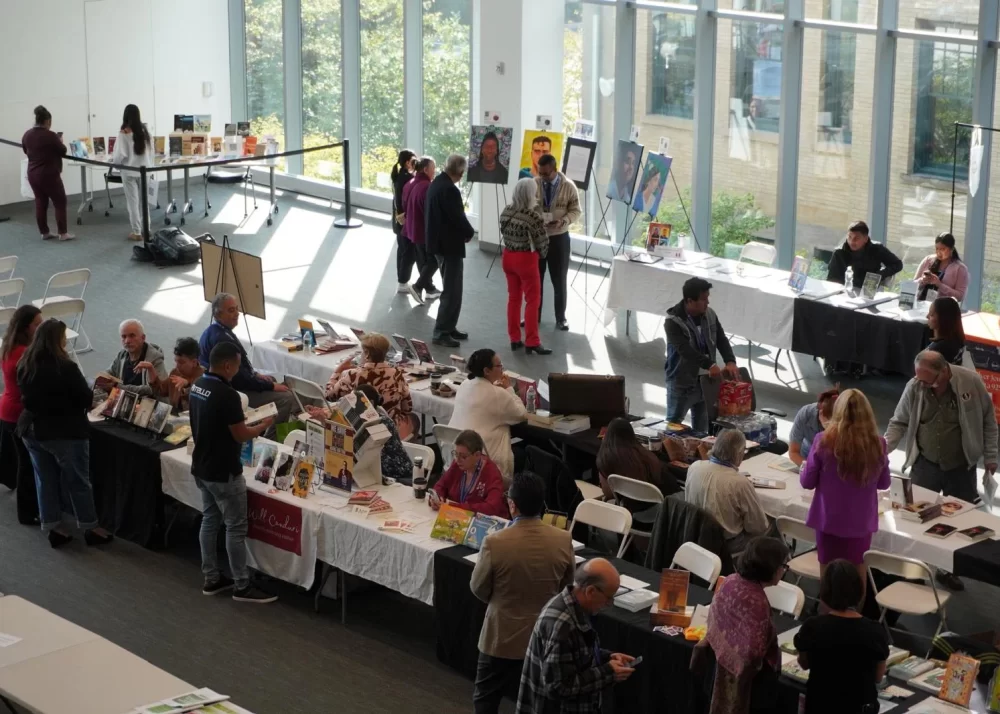
Discover a new world at the Book Fair, where Spanish-language literature comes to life. Featuring book presentations, prominent author meet-and-greets, and live music celebrating Hispanic culture in a vibrant, family-friendly environment.
Music possesses the extraordinary gift of anchoring memories in our collective consciousness. A single melody can capture the joy of a summer, accompany our deepest grief, or become the personal anthem of an entire generation. Yet, behind the brilliance of spotlights, thunderous applause, and the magnetism of fame, there often exists a shadowy realm where celebrity intersects with human vulnerability, obsessive behavior, and devastating violence.
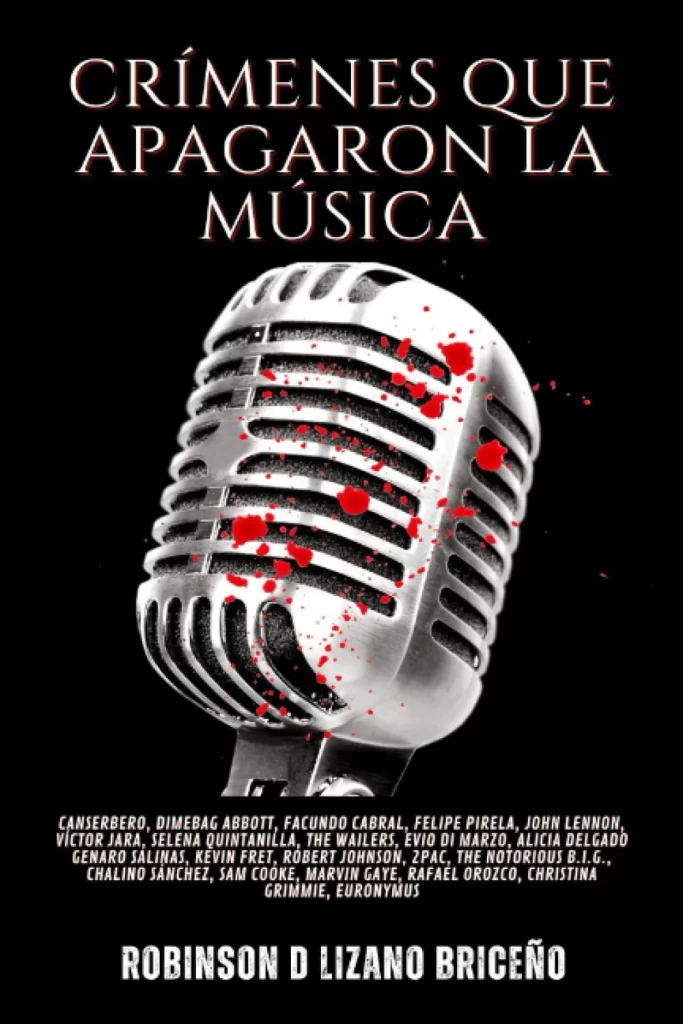
This complex and haunting territory is explored with remarkable craft by Venezuelan journalist, writer, and researcher Robinson Lizano in his book Crímenes que apagaron la música (Crimes That Silenced the Music). Far removed from sensationalist yellow journalism, this work delivers a series of rigorous investigations that uncover the police files, motives, and hidden secrets behind the deaths that permanently silenced legendary figures of world music.
The Insightful Voice of a Seasoned Chronicler
Addressing sensitive events without slipping into tabloid melodrama requires journalistic discipline honed over decades. Robinson Lizano brings more than thirty years of experience in investigative reporting, university teaching, and media leadership in Latin America. After serving as an assistant professor at Universidad Católica Andrés Bello in Caracas, where he trained generations of journalists, Lizano brought his scholarly vocation to the American Midwest.
He is currently pursuing doctoral studies in Latin American Cultural and Literary Studies at The Ohio State University and lives with his family in Marysville, Ohio, where he also engages in community work as an educator and advocate for Spanish language reading. That dual perspective of seasoned reporter and academic researcher is felt in every chapter: he never settles for merely recounting the fatal gunshot or assault, but meticulously reconstructs the social climate, music industry pressures, and the human psychology of everyone involved.
«Music can be a radiant beacon of hope, but it can also become a dangerous magnet for tragedy when it collides with greed, fanaticism, or societal breakdown.»
From Ecstasy to Obsession: When Fanaticism Pulls the Trigger
One of the most chilling chapters of the book examines crimes committed by obsessed fans. Lizano revisits the murder of John Lennon outside the Dakota Building in New York by Mark David Chapman in 1980, as well as the heartbreaking loss of Selena Quintanilla in Texas in 1995 at the hands of her fan club president. The book also covers modern tragedies such as young singer Christina Grimmie, shot in Orlando in 2016 following a meet-and-greet session with fans.
For readers in Ohio, this section carries an intensely personal resonance. The book recounts the tragic night of December 8, 2004, at the Alrosa Villa nightclub in Columbus, Ohio, when an armed gunman stormed the stage and killed Dimebag Darrell (Darrell Abbott), the iconic guitar player of Pantera and Damageplan, along with three other victims. Lizano recounts the shock and sorrow of that Columbus venue with deep dignity, turning the tragedy into a thoughtful reflection on artist safety and gun violence.
Urban Rivalries, Cartel Shadows, and Political Violence
The volume goes well beyond fan crimes, illustrating how distinct musical movements have become ensnared in cycles of conflict and organized crime.
In American hip hop, Lizano examines the unsolved drive-by murders of Tupac Shakur in Las Vegas (1996) and The Notorious B.I.G. in Los Angeles (1997), watershed moments that exposed deadly friction between rival record labels and street culture. In Latin America, the dark reach of cartels is traced through Chalino Sánchez, the Mexican corrido king executed in Sinaloa hours after receiving a chilling death note onstage, and Rafael Orozco, the golden voice of Colombian vallenato group Binomio de Oro, gunned down in Barranquilla amidst intricate romantic and underworld rivalries.
Alongside these chronicles stand stories where state repression and intolerance cut lives short, such as the torture and assassination of folk icon Víctor Jara in Chile’s National Stadium following the 1973 coup, and the 2011 Guatemala ambush that claimed the life of beloved Argentine poet and singer Facundo Cabral. Readers will also encounter intimate family tragedies and enduring mysteries, from Marvin Gaye’s fatal shooting by his own father to the poisoned whiskey lore surrounding delta blues pioneer Robert Johnson, the murder of Euronymous in Norway’s black metal scene, and the contested case of Venezuelan rapper Canserbero (Tirone González), an investigation where Lizano has provided substantial journalistic clarity.
An Essential Read for Lovers of Music and Investigative Journalism
What makes this book such a compelling read is the clarity and pace of its storytelling. Despite the somber nature of its subjects, Lizano writes with an engaging, rhythmic narrative that weaves judicial facts and cultural context together seamlessly. It is a book designed equally for music enthusiasts, true crime readers, and admirers of high-caliber literary non-fiction.
Closing this book leaves one with an enduring realization: violence may cut lives short and silence microphones, but it can never erase the artistic legacy of those who turned vulnerability and passion into timeless songs.
Featured Book
Crímenes que apagaron la música
Author: Robinson Lizano | Creative non-fiction, investigative journalism, and cultural chronicle. Explore full book details on our website or get your copy on Amazon and select bookstores including The Book Loft in German Village (Columbus, Ohio).
Raising bilingual children in Ohio is a beautiful experience and, at the same time, a daily challenge that many families share. Those of us living in cities like Columbus, Dublin, Westerville, Cincinnati, or Cleveland know firsthand that almost imperceptible transition that occurs when little ones start preschool or elementary school: suddenly, English fills every corner of their day, their games, and their thoughts.
One ordinary afternoon, a mother or father asks the usual question in the kitchen: «How was your day at school, sweetheart?». And the response, almost automatic, comes back in English: «Good, we played outside with my friends». There is no rebellion in that answer, nor a lack of interest in their heritage; it is simply the natural pull of the school and social environment. In that moment, the concern that many parents carry in their hearts arises: how do we ensure that Spanish does not remain trapped in the past and continues to be a living part of their present?
The most noble, loving, and lasting answer we have found in our community is not found in scoldings or rigid grammar lessons, but in a simple, timeless gesture: opening a good book in Spanish before turning off the nightstand lamp.
Language as a Sanctuary of Affection, Not School Homework
When we try to protect Spanish by demanding it as a strict rule («we only speak Spanish here» or «do not answer me in English»), we run the unintended risk of associating our native tongue with effort, constant correction, or frustration. A child may begin to feel that English is the language of friends, laughter, and cartoons, while Spanish is the language of household chores: picking up toys, brushing teeth, or finishing homework.
Children’s books break that cycle at its root. By sharing an illustrated story, Spanish becomes the language of adventures, fantastic creatures, mystery, and shared laughter between parents and children. The language stops being a list of instructions and becomes a warm space of connection, where the voice of the reader comforts and accompanies.
«When a bilingual child falls in love with a book in Spanish, they do not just learn new words; they learn that their family language holds beauty, imagination, and a rightful place in the modern world.»
Shared Memory and the Bridge to Extended Family
For Hispanic families in the American Midwest, Spanish is above all an emotional bridge. It is the invisible thread that connects our children with grandparents living thousands of miles away, with cousins they talk to on weekends, and with a rich and diverse cultural heritage.
A child who reads stories in Spanish naturally adopts the expressions, affectionate phrases, and melodic rhythm of our homelands. They understand family humor and learn to name traditional meals, landscapes, and celebrations without needing abstract explanations. The day they call their grandmother on a video call, the conversation flows without awkward silences or barriers, because the shared words remain alive in their recent memory.
Cognitive Benefits That Endure Over Time
For decades, there was an unfounded myth that nurturing two languages during childhood could confuse children or hinder their academic performance in English. Today we know with certainty that quite the opposite is true. The bilingual brain is agile, flexible, and accustomed to viewing reality from multiple perspectives.
When a child learns to read in Spanish, they develop clear phonological awareness thanks to the phonetic transparency of our alphabet. That ability to connect sounds with letters transfers directly to English, enhancing reading comprehension in both languages. A child who understands from an early age that the same idea can be expressed with different words gains greater analytical skills, stronger problem-solving focus, and a natural empathy for understanding different points of view.
The Reality in Ohio and How to Bring Books Home
We know that living away from traditional large Spanish-speaking metropolitan centers presents practical challenges. In Ohio, it is not always easy to find bookstores with shelves dedicated to children’s literature in Spanish. However, in recent years the community has gained valuable ground that is well worth exploring:
Metropolitan public libraries: Library systems such as the Columbus Metropolitan Library and community libraries in Hilliard, Hilltop, Dublin, and other locations now offer bilingual and Spanish children’s literature sections, along with free digital catalogs through apps like Libby and Hoopla.
Book exchanges between families: Creating small lending networks among friends and neighbors allows children’s stories to circulate and gain new life in different households without large expenses.
Community spaces and reading clubs: Initiatives such as children’s Spanish classes, creative workshops, and the Book Fair organized by the Ohio Writers Association provide gathering places where children see peers their own age reading, playing, and expressing themselves naturally in Spanish.
Small Daily Rituals That Make a Difference
There is no need to spend hours or set up a home school. Loving consistency always outweighs the quantity of time. Fifteen minutes a day is enough to plant a habit that will last a lifetime.
A good idea is to let children choose which book they want to read, even if they repeat the same story five nights in a row. That repetition provides security and helps them absorb phrasing effortlessly. It also works very well to pause briefly to discuss illustrations, imagine what happens on the next page, or connect the story to a family memory: «Do you remember when we went to the park and saw a tree like this one?».
If the child responds in English while discussing the story, there is no need to interrupt to correct them. The most effective approach is to welcome their comment naturally and reflect it back in Spanish: if they say «The fox is so fast!», we can answer «Yes, the fox runs so fast through the forest!». In this way, the conversation keeps flowing and the child hears the right expression without feeling tested.
A Treasure No One Can Take Away
Every page we share with our children in Spanish in Ohio is a gift of twofold value. On one hand, we are giving them an invaluable professional asset for adulthood in an interconnected world. On the other hand, and perhaps most importantly, we are giving them the certainty of knowing who they are and where their roots come from.
A child who grows up reading in two languages does not divide their identity; they multiply it. They carry the strength of two worlds, the richness of two cultures, and the deep conviction that their voice has a meaningful, resonant place in both English and Spanish. And that entire journey begins, simply, by opening a book together at the end of the day.
Book review
When God looks where others don’t look
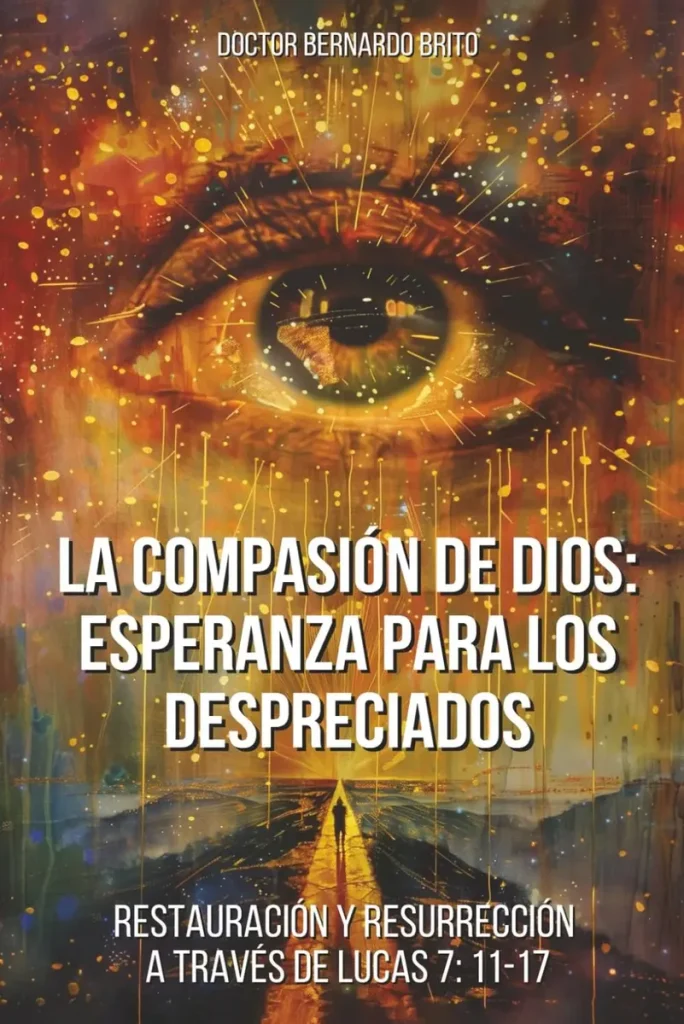
I wrote this book from a truth that I did not learn in books, but in life: there are pains that do not seek explanation, but rather recognition. God’s compassion: hope for the despised is born from that place where human beings feel invisible, where history seems not to matter, where silence weighs more than words. My own history marked by loss, adversity, and constant struggle taught me that God does not reveal himself in perfection, but in necessity. My own story marked by loss, adversity and constant struggle. I grew up in the midst of difficult circumstances that forged my character, but also awakened a profound question: where is God when pain seems to have no answer? taught me that God does not reveal himself in perfection, but in necessity. This book is, in essence, the answer I found.
Compassion as a divine act, not as a passing emotion
Durante mucho tiempo se ha reducido la compasión a un sentimiento. Pero al escribir esta obra comprendí que la compasión de Dios no es un gesto momentáneo: es una intervención. It is an act that transforms, that interrupts pain, that restores dignity. As I meditated on the stories in Luke 7:11-17 and Mark 10:46-52, I discovered something that changed the way I view faith: God does not ignore human suffering. It stops. Observe. And he answers. The widow of Nain did not ask for a miracle. Bartimaeus was silenced by the crowd. However, both were seen by God. And in that act of being seen, their restoration began.
The despised: those the world has forgotten
This book is written for those who have been relegated to the margins. Para quienes han sentido que su historia no tiene espacio, que su voz no es escuchada, que su vida no tiene valor. But it is also written for those who, without realizing it, have learned to live with indifference. Because compassion not only transforms the one who receives it, it also confronts the one who observes it. I understood that the biggest problem is not the absence of faith, but the absence of vision. We have learned to see without stopping, to listen without understanding, to live without getting involved. And this book seeks to break that habit.
Restoration: beyond the visible miracle
One of the biggest mistakes is to think that the restoration ends when the problem disappears. But God’s restoration is deeper: it restores identity, purpose and dignity. When Jesus raises the widow’s son, he not only restores life. Returns hope. uration ends when the problem disappears. But God’s restoration is deeper: it restores identity, purpose and dignity. When Bartimaeus receives his sight, he not only regains his physical vision, but also his place in the world. That’s what I understood while I was writing: God not only changes circumstances, he transforms destinies.
The faith that is born in the midst of clamor
The faith that is born in the midst ofThe faith that I present in this book is not comfortable or silent. It is a faith that screams, that insists, that rises up even when everything seems lost. The cry Bartimaeus was not listened to because he remained silent, but because he dared to insist. And in that insistence I found one of the most human truths of spirituality: faith is not always elegant, but it is always authentic when it is born from necessity.
A compassion that becomes a calling
One day, as I progressed in writing, I realized that this book could not remain a reflection. It had to become a calling. Passion that becomes a calling Because God’s compassion is not just something that is received…it is something that is reproduced. We cannot talk about faith if we remain indifferent. We cannot talk about transformation if we are not willing to look at the other in depth. This book is not just a message. It is an invitation to live differently.
God has not passed by your story
If there is one thing I wish to remain after these pages, it is this certainty: God has not ignored you. It hasn’t passed by. He hasn’t forgotten your story. On the contrary, it has stopped. And in that stopping, there is an opportunity.
A special invitation
If you have ever felt invisible, if you have ever believed that your story has no value, this book is for you. I invite you to read this work and the others I have written, not as someone looking for immediate answers, but as someone who is willing to find themselves. Because each book is an encounter. And each encounter can transform a life.
Share it on your social media
Book review
The origin: when pain becomes seed
Escribí este libro desde la memoria viva de lo que duele y no se olvida.
Not as an exercise in nostalgia, but as an act of reconciliation with what marked me.
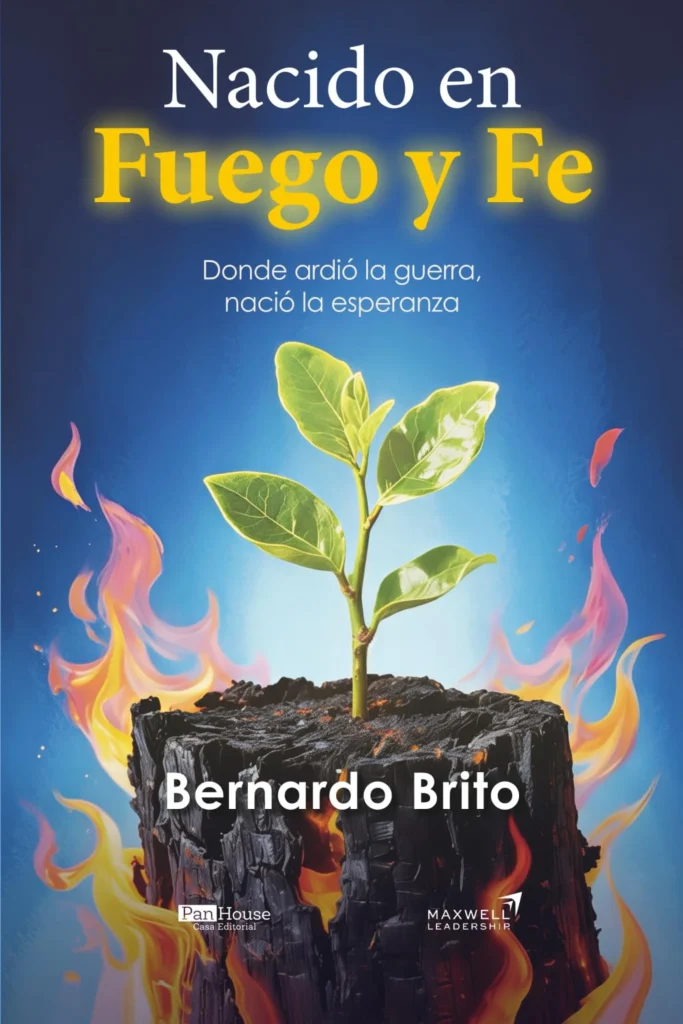
Born in fire and faith is not born from comfort, but from the profound experience of having gone through moments where everything seemed lost.
I understood that fire does not always destroy; sometimes it reveals what remains when everything else disappears.
Among the ashes: rebuilding from within
In these pages I do not only tell a story, but a process.
That of falling, questioning, resisting and getting up again.
Internal or external war leaves traces, but it also opens paths.
This book is testimony that even in the midst of chaos, direction can emerge.
Like all true transformation, it does not begin outside, but inside whoever decides not to give up.
As described in works of this approach, the purpose is born precisely in the midst of the pain overcome and the experience lived.
Faith as an act of reconstruction
I am not talking about a distant or theoretical faith. I’m talking about a faith that becomes a decision, that is built in the midst of uncertainty.
I understood that believing is not evading reality, but facing it with a different perspective.
Faith, in this book, is not a passive refuge, but an active force: a way of rebuilding life when everything seems to have collapsed.
Reborn: a new way of living life
If this work sustains anything, it is the conviction that it is always possible to start over.
Not from forgetting, but from understanding.
Every wound, every loss, every silence experienced has the potential to become a new beginning.
Being reborn is not being the same again: it is becoming someone more conscious, firmer, more willing to live with purpose.
A request for readers
If you have ever felt that the fire of life has been too intense, this book is for you.
I invite you to read this work and the others I have written, not as someone looking for immediate answers, but as someone who is willing to rebuild.
Because each shared story is also an open door and perhaps, in it, you will find the beginning of your own rebirth.
A special invitation
If these words have found an echo within you, then this book has already begun its purpose.
I invite you to read this work and the others I have written, not as someone looking for immediate answers, but as someone who is preparing to follow a path. Because each book is a threshold, and each reading, an opportunity to meet.
And maybe just maybe that encounter will also transform your way of living your faith.
Share it on your social media
Book review
A faith that is born from life
I wrote this book from a conviction that was not born in books, but in life: faith cannot remain in thought; It must be embodied in everyday life.
For a long time I observed how theology was seen as a territory reserved for experts, distant, almost inaccessible.
That distance, rather than bringing God closer, made him alien. However, I understood something essential: God does not dwell in the complexity of language, but in the simplicity of experience, in what is lived rather than what is explained.
An invitation to walk, not to theorize
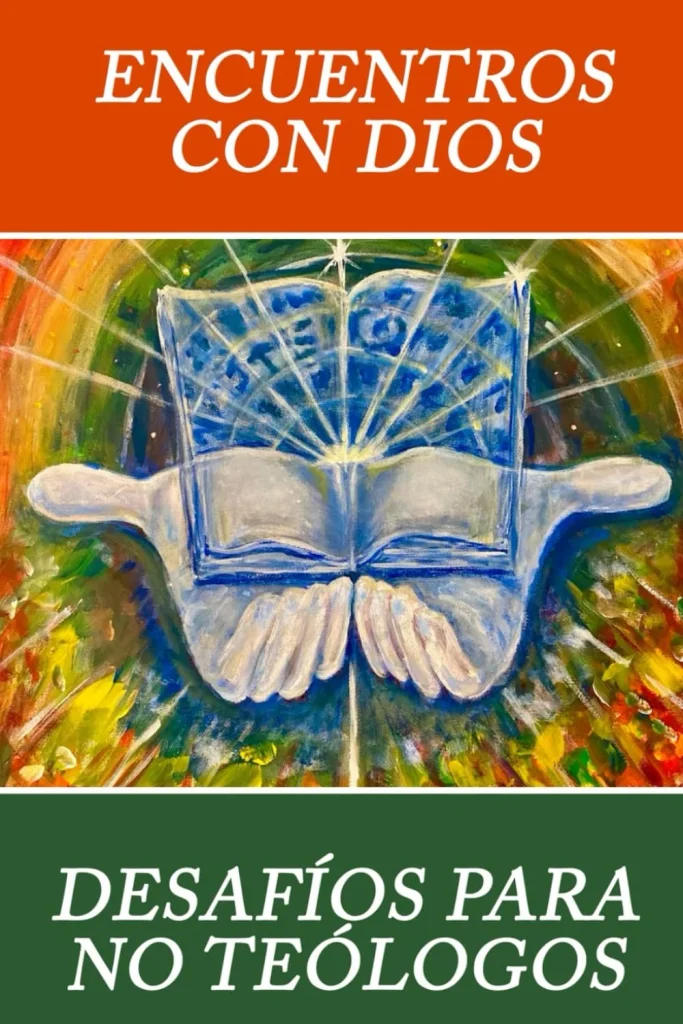
In Encounters with God: challenges for non-theologians, I do not seek to teach from a chair, but rather to walk alongside the reader.
Each page is born with the intention of opening an honest, close, human dialogue.
I do not propose an abstract faith, but a living presence that runs through our decisions, our doubts and our daily struggles.
The work raises a fundamental truth: everything that God reveals can become part of our lives if we decide to allow it, if we stop observing from afar and begin to get involved from within.
Written for those still searching
I don’t write for those who know everything, but for those who still wonder.
For those who feel that faith has become distant, incomprehensible or even unattainable.
This book is born for those who are at that breaking point where certainties are no longer enough, but the questions still burn. Because in those sometimes silent questions the true spiritual path begins.
Transformation as a living experience
This book does not aim to offer definitive answers, but rather to provoke encounters. I understood that true transformation does not occur when we understand God, but when we live him.
Faith stops being discourse when it becomes experience. And that experience, far from isolating us, brings us closer to life, to others and to ourselves. The encounter with God is not evasion, it is confrontation, it is awakening.
God in everyday life
If there is one thing I wish to remain after these pages, it is this certainty: God is not far away.
It is present in the everyday, in the simple, in what we often overlook.
Daily life with its lights and shadows is the true space where the divine is revealed in the simple, in what we often overlook.
There is no need to search in the extraordinary for what already lives in the essential.
A special invitation
If these words have found an echo within you, then this book has already begun its purpose.
I invite you to read this work and the others I have written, not as someone looking for immediate answers, but as someone who is preparing to follow a path. Because each book is a threshold, and each reading, an opportunity to meet.
And maybe just maybe that encounter will also transform your way of living your faith.
Share it on your social media
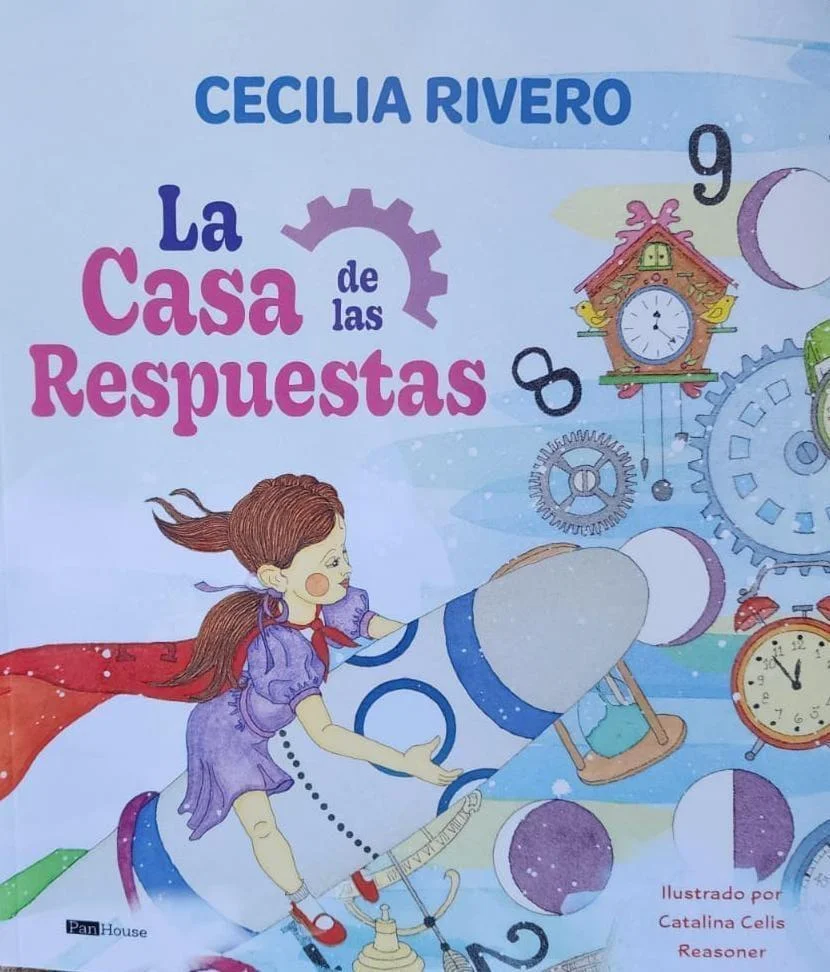
Portada del libro La Casa de las Respuestas de Cecilia Rivero.
Book review
When I imagined The House of Answers, I wasn’t simply thinking of a story to be read. I was thinking of a symbolic space, an inner house that we all inhabit, although we rarely stop to explore it with real attention. From a young age, we learn to look for answers outside ourselves. We ask adults, teachers, books, and the world around us. However, as time goes by, we discover something that transforms our perspective on life: many of the answers we seek are not outside, but within ourselves. That understanding was the starting point for this work. The House of Answers offers the reader a journey full of imagination, curiosity, and reflection. The story follows a girl who, guided by her desire to understand the world, enters a space where every corner awakens new questions. This is not an ordinary place; it is a house that symbolizes the exploration of the inner world, where each door represents an opportunity to look deeper within oneself. The questions that appear in the book are not obstacles or impossible enigmas. They are doors that invite us to stop, to observe our emotions, to think about time, about the decisions we make, and about the way we build our own story. While writing this book, I realized that curiosity is one of the most powerful forces we have as human beings. Asking questions is not a sign of weakness or uncertainty; on the contrary, it is a way of awakening consciousness. Each question opens a space for learning and personal discovery. In the story, the visual elements of clocks, gears, and moving mechanisms evoke the passage of time and the dynamics of our thoughts. The human mind is never still; it constantly seeks to understand, connect ideas, and find meaning in what we experience. That is why this work is aimed at both young readers and adults. At some point in our lives, we all face questions that seem to have no immediate answer. Who am I? What do I want to be? What does it truly mean to understand something? The House of Answers It does not aim to offer definitive solutions. Its intention is much simpler and, at the same time, more profound: to remind us that within each person there is an inner wisdom capable of guiding their decisions. If, upon finishing the book, the reader discovers a new question within themselves, then the story has fulfilled its purpose. Because sometimes the real answer doesn’t come when we find an explanation, but when we learn to listen carefully to what our own conscience is trying to tell us.
Share it on your social media
Portada del libro Semillas de Luz de Cecilia Rivero.
Book review
From the moment I conceived Seeds of Light, my intention was clear: to create something that is not only read, but lived.
This book is not intended to be a simple story, but an invitation to explore the inner garden where each human being keeps their own light, silent and powerful.
I wanted to write with accessible, sensitive, and profound words because I understood that personal transformation begins in simplicity, in the attentive observation of our gestures, thoughts, and emotions.
The work is presented as a story that embraces both children and adults, because the connection with our inner world transcends ages.
Through the story of Ceci, a girl who discovers the importance of sowing luminous values in every gesture, the reader is invited to reflect on how every action, every word, and every choice can become a seed of light that illuminates not only her own life, but also the environment around her.
Storytelling in service of the heart
Seeds of Light was born from the conviction that spirituality and personal development do not require complicated speeches, but a conscious presence with oneself and with others.
Each chapter, each sentence, is designed as a seed that awakens a spark of clarity in the reader, motivating them to look closely at their inner world.
Through clear and warm language, the book proposes that we recognize the light that is already in our hearts, the one that is often hidden among hurried thoughts and worries.
The essential invitation is to contemplate life from the presence and intention of sowing something positive in every moment.
Sowing values in everyday life
What moves me most when I see people holding this book is that Seeds of Light becomes a mirror that accompanies them in their decisions, in their way of relating to others, and in their way of experiencing existence.
Ceci’s story is not just a tale for the youngest readers: it is an invitation for every reader, regardless of age, to discover that light is cultivated from the depths of the heart and is expressed in every act of kindness, every compassionate word, and every conscious step.Beyond being a story, it is a guide to cultivating inner light, that force that drives us to act with love, presence, and gratitude every day.
Ceci’s story is not just a tale for the youngest readers: it is an invitation for every reader, regardless of age, to discover that light is cultivated from the depths of the heart and is expressed in every act of kindness, every compassionate word, and every conscious step.
A call to live from presence
If you are about to open this book, I invite you to read it not as a pastime, but as an experience of introspection. Allow each page to touch you at the core of your being, and let each seed, finding fertile ground within you, blossom into acts of love, understanding, and serenity.
My deepest desire in sharing Seeds of Light is that its teachings become a present light in your daily life and transform the way you see your inner and outer world.
Share it on your social media
Reseña del libro
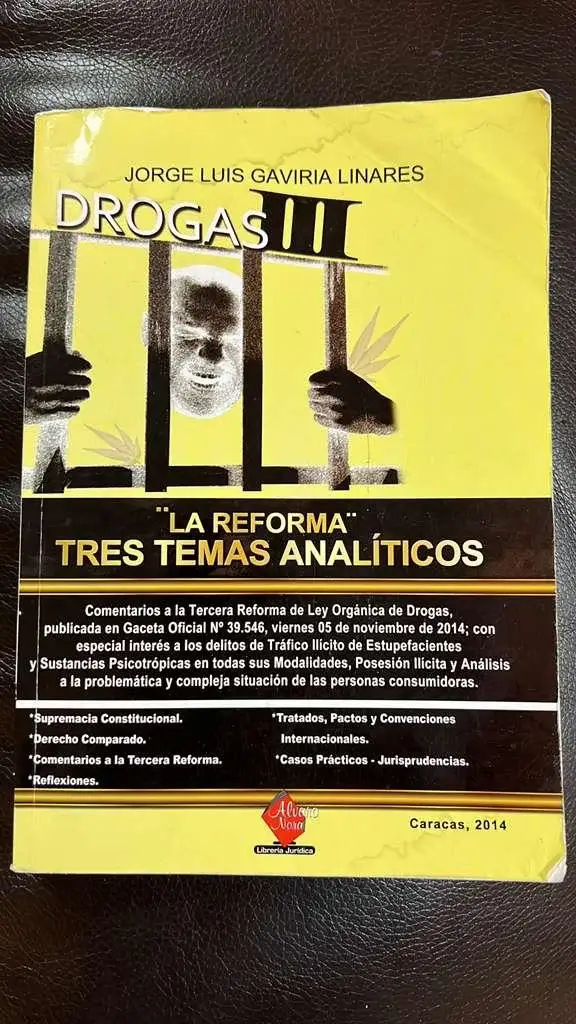
Writing Drugs III The Reform, I consciously took on a different challenge than the previous works. If in the first books the emphasis was placed on the analysis of crime and immediate legal practice, in this third volume I decided to focus the reflection on a crucial moment in Criminal Law: the reform. Reforming the law is not a merely technical act; It is, above all, a political, legal and moral decision that defines the direction of justice in a society.
This work arises from the need to carefully examine how legal reforms on drugs impact not only the regulatory texts, but also the real lives of people, the actions of justice operators and the coherence of the penal system. Throughout my career I have observed that many reforms are promoted hastily, without a thorough evaluation of their practical consequences. This book seeks precisely to stop, analyze and reflect.
In Drugs III The Reform I address three analytical topics that I consider fundamental to understanding the scope and implications of regulatory changes regarding drugs. This is not a chronological exposition of legal reforms, but rather a critical examination of their foundations, the criteria that support them and the results they produce in the daily application of the Law.
The first axis of analysis focuses on the reason for the penal reform.
The first axis of analysis focuses on the interest in unraveling what motivates the legislator to modify the existing regulations and whether these motivations really respond to criteria of justice, proportionality and effectiveness. Here I raise essential questions: does the reform address a real social need? Does it correct deficiencies in the previous system? Or does it simply introduce new interpretative tensions? into the reason for the penal reform.
The second analytical topic delves into the jurisprudential interpretation after the reform. Experience shows that any legal modification generates a period of uncertainty in the courts.
In this book I examine how judges have accepted the regulatory changes, what criteria have prevailed, and how jurisprudence has contributed—or not—to providing coherence to the new legal framework.
This review is not descriptive, but evaluative, aimed at identifying interpretive successes and risks.
The third axis addresses the social and human dimension of the reform. No criminal law is neutral.
Each reformed article has concrete effects on individuals, families and communities. From this perspective, I reflect on the relationship between criminal policy, social control and human dignity, defending the idea that Criminal Law cannot be separated from its ethical and social function.
I have written this work with deliberately clear language, without renouncing technical rigor. My goal is that the reader—whether judge, prosecutor, lawyer, student, or researcher—can understand not only the content of the reform, but also its profound implications.
Expository clarity is, for me, a form of respect for the reader and for the Law itself.
This book is not intended to offer definitive answers or absolute solutions. Rather, it seeks to provoke reflection, stimulate informed debate, and provide conceptual tools for a responsible interpretation of the law.
I firmly believe that penal reform should be a thoughtful process, not an impulsive one; humane, not merely punitive.
With Drugs III La Reforma I close a stage of analysis within this series, but at the same time I open a space for discussion that continues to be necessary.
The phenomenon of drugs, its regulation and its legal treatment continue to evolve, and with them our way of thinking about the Law must also evolve.
This book is, in essence, an invitation to look at legal reform with prudence, with depth and with a sense of justice.
Share it on your social media
Reseña del libro
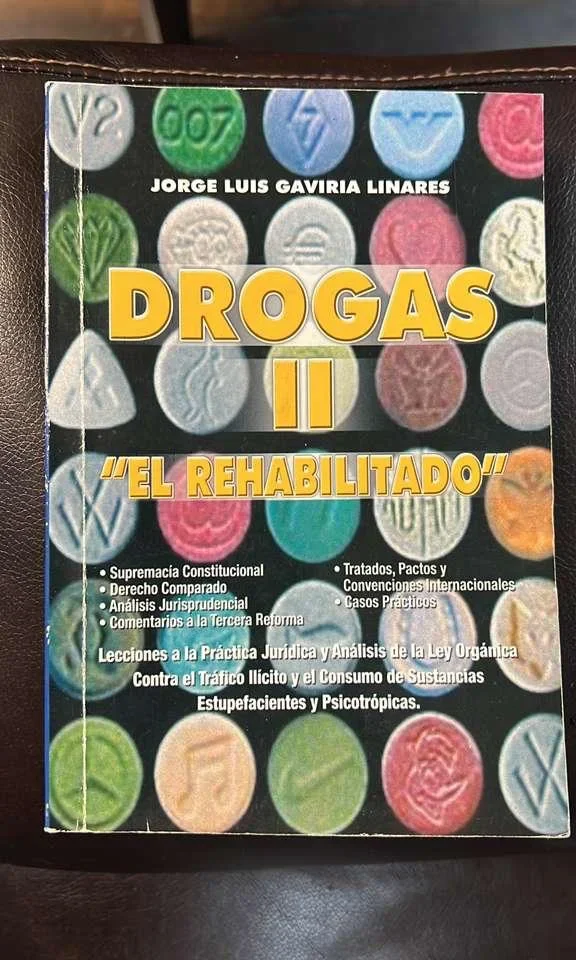
Several years ago I undertook the writing of Drogas II – El Rehabilitado, a project that was born from direct experience with the application of the Organic Law against Illicit Trafficking and the Consumption of Narcotic and Psychotropic Substances, as well as from the rigorous study of its jurisprudential interpretation and daily practice.
This book represents a natural continuation of my reflection on the phenomenon of drugs and its legal treatment, but with a more precise focus: the legal practice of the rehabilitated person in the face of the criminal and procedural norm.
My intention in preparing this work was clear from the beginning: it was not about writing a merely descriptive compendium of legal articles or reiterating doctrinal dogmas, but rather about offering a critical, practical and humanly sensitive guide on how the criminal law and its interpretation are translated into judicial decisions and concrete effects on people. This implies that the book brings together legal theory with lived experience, with special attention to those who, after criminalized behavior, are subject to criminal action and seek not only a sentence, but a dignified reintegration into society.
In The Rehabilitated, the reader will find a deliberately practical approach. Each chapter is structured to explore key aspects of criminal law on drugs: from the objective elements of the criminal offense to the application of sanctions and alternative measures that favor social reintegration.
This orientation is based on the conviction that criminal law, in addition to sanctioning, must offer paths that integrate courage and hope in those who have crossed the threshold of conflict with the law.
The work examines in detail the Organic Law against Illicit Trafficking and the Consumption of Narcotic and Psychotropic Substances, not only from its letter, but from its spirit and its practical effects.
I analyze the mechanisms that the law establishes to distinguish between punishable behaviors and those that must be treated with a therapeutic or rehabilitative approach, highlighting the need for interpretive criteria that respect the principles of proportionality, legality and restorative justice.
This book was written with the knowledge that rules are only as effective as the understanding of those who apply them.
This book was written with the knowledge that rules are only as effective as the understanding of those who apply them.Por ello, he dedicado amplios segmentos a la jurisprudencia, no como un catálogo de fallos, sino como una fuente viva que ilumina cómo los tribunales han interpretado y aplicado la ley a partir de situaciones reales.
I believe that this jurisprudential review not only helps to understand the Law in its current state, but also allows us to visualize interpretative paths that can strengthen a more equitable and coherent administration of justice.
In addition, I have included critical reflections on some of the most controversial assumptions of the law, proposing interpretive criteria that favor not only legal logic, but also human equity. This technical and humanistic duality is what I have sought to cultivate throughout the entire text.
Practical experience in courts, combined with academic study, led me to formulate specific proposals to improve the application of the law in situations that today generate doctrinal or interpretative tensions.
These proposals are not presented dogmatically, but rather as argued convictions, the result of direct observation and analysis of specific cases.
It is my hope that Drogas II El Rehabilitado serves both as a consultation tool for justice operators, public defenders, prosecutors and judges, as well as a source of reflection for law students and for any reader interested in understanding the complexity of the legal phenomenon of drugs from a critical and applied perspective.
Finally, this book is an invitation to look beyond the punitive sanction, to consider the value of rehabilitation and social reintegration as axes of a Criminal Law that not only punishes, but also humanizes.
Share it on your social media
Reseña del libro
I share with you a work built from practical experience, legal reflection and deep observation of the drug phenomenon within the penal system.
This analysis is born from the conviction that the Law must be an instrument of justice and not of uncertainty.
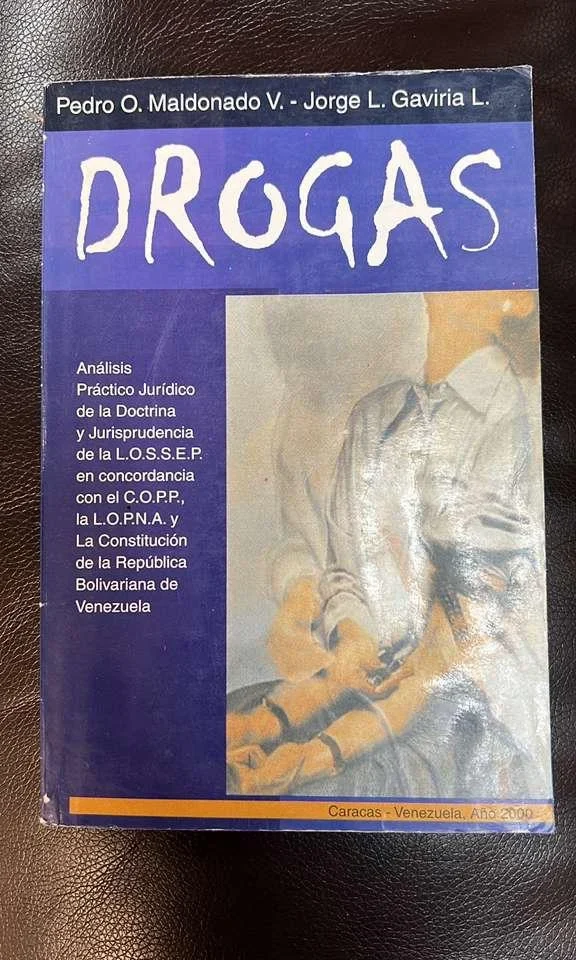
The motivation that led me to write Drugs: Analysis of Crime, Jurisprudence and Annotations on Law Reform arises from a professional concern that has grown over the years of service: to thoroughly understand how criminal law responds and should respond to realities as complex as those posed by the drug phenomenon.
For decades, I have seen how justice operators, students and colleagues face the same question: is the criminal law prepared to deal with such a multifaceted problem without sacrificing fundamental principles of law?
This work is my answer to that question, built with the intention of providing light, order and perspective to the legal analysis on this topic.
Throughout these pages you will not find a sensational or simplistic discourse.
Rather, I offer you an intellectual journey that starts from the normative to reach the interpretive, and from there towards a critical and propositional stance.
I wanted to explore the crime linked to drugs not as a social stigma, but as a phenomenon that deserves to be examined from the norm, from jurisprudence and from the practical reality that we face every day in courts and offices.
My approach is aware that criminal law is a delicate instrument: powerful in its scope, but susceptible to injustice when applied without consideration. Therefore, one of the main axes of this book is the jurisprudential review.
It is not just about citing rulings: I have sought to understand how and why courts have adopted certain criteria to interpret the law, what approaches have prevailed, and what consequences these interpretations have had on judicial practice.
This part of the text is designed to offer a guide that accompanies the professional in understanding and arguing the law, at the same time as providing elements of judgment for academic reflection.
Beyond the fractal analyzes of judicial criteria, I dedicate a significant section of this work to notes on legal reform. In my career, I have observed that regulatory reform cannot be an automatic or hasty exercise; It must be based on principles of proportionality, respect for human rights and internal coherence.
Therefore, in these notes I not only describe the proposed or implemented reforms, but I subject them to critical scrutiny that seeks to highlight their virtues and expose their limitations, always with a vision oriented towards the real impact on the administration of justice.
Another aspect that has been central to me during the writing of this book is understanding the legal phenomenon of drugs not as a watertight compartment, but as a point of confluence between the theory of crime, the criminal process, criminal policy and human dignity.
These elements, intertwined, allow me to offer a discourse that not only describes, but also proposes: how can Criminal Law function as an effective regulatory mechanism without losing sight of the guiding principles that make it justice?
The work is written with the intention of being useful. Nothing here is free.
Each concept, each failure analyzed, each reform proposal, has been carefully selected to help the reader clearly understand the complexity of applying the law in real contexts, where the norm meets people’s lives.
I have sought a style that balances technical rigor with clear and accessible exposition.
This does not mean simplifying the content, but rather making it intelligible without loss of legal precision. Through examples, analysis and jurisprudential references, the reader will find a work that can accompany both academic training and daily practice.
By sharing this book, my intention is also to open a space for dialogue.
The phenomenon of drugs, its regulation, its social impact and its criminal treatment are issues that require informed discussion, critical debate and constant reflection. This text is not intended to be the last word, but rather an invitation to think rigorously, with responsibility and with humanity.
Finally, I confess that this editorial project has been, for me, an exercise in commitment to justice, to rigorous legal thinking and to those who, from different roles, seek to deeply understand how Law can be a tool of social order and equity.
This book is part of that commitment. And it is my hope that, as you read it, you will find it as useful as I found writing it.
Share it on your social media
📚
Explore a universe of books
Enjoy a wide selection of Spanish-language works.
Find that book that will resonate with you.
Writing workshops for adults.
Cardboard bookmaking workshops for children.
✍️
Meet your favorite authors
Interact with more than 25 prominent Latino authors.
Discover their stories and be inspired by their talent.
🎵
Enjoy live music
Enjoy live musical performances that will make you feel the rhythm.
Experience the energy and joy of Hispanic culture.
🌮
Savor Hispanic culture
Sample a delicious variety of traditional Latin American dishes.
Enjoy an explosion of flavors.
👨👩👧👦
A space for the whole family
Theater performances.
Visual art exhibition.
Traditional Latin American dances.
Official photo booth.
Scavenger hunt game with prizes.
Free book giveaways.
FREE ADMISSION
Event Details
📅
DateSaturday, October 12, 2024
⏰
Time9:00 AM – 6:00 PM
📍
LocationColumbus Metropolitan Library 968 Grant Avenue, Columbus, OH 43215
✨ FREE ADMISSION & FREE PARKING
Memory Gallery
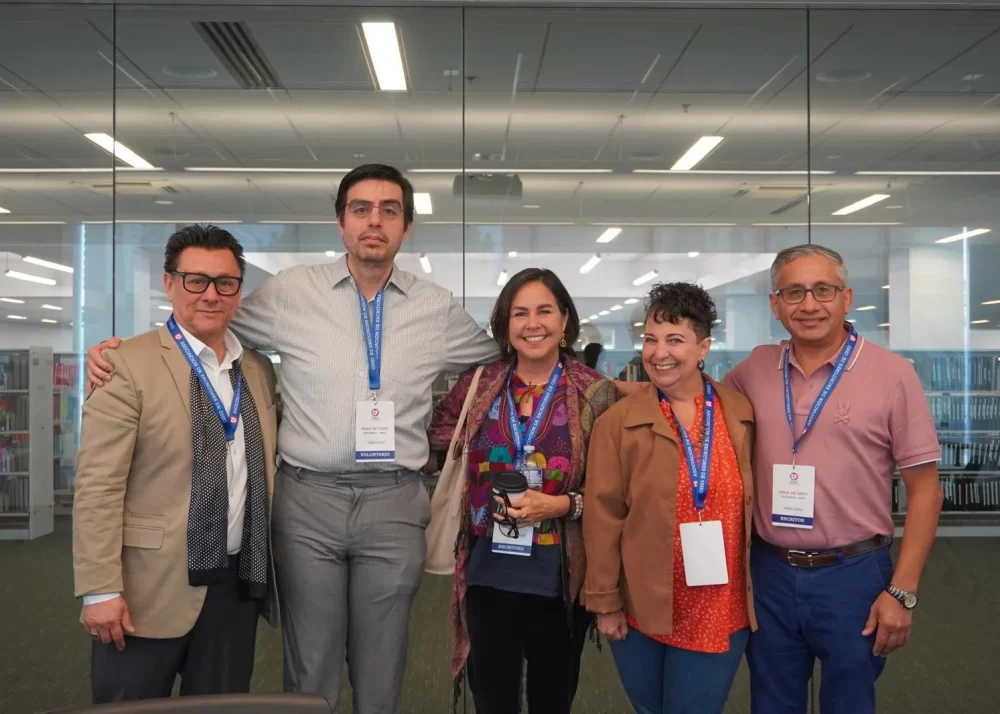
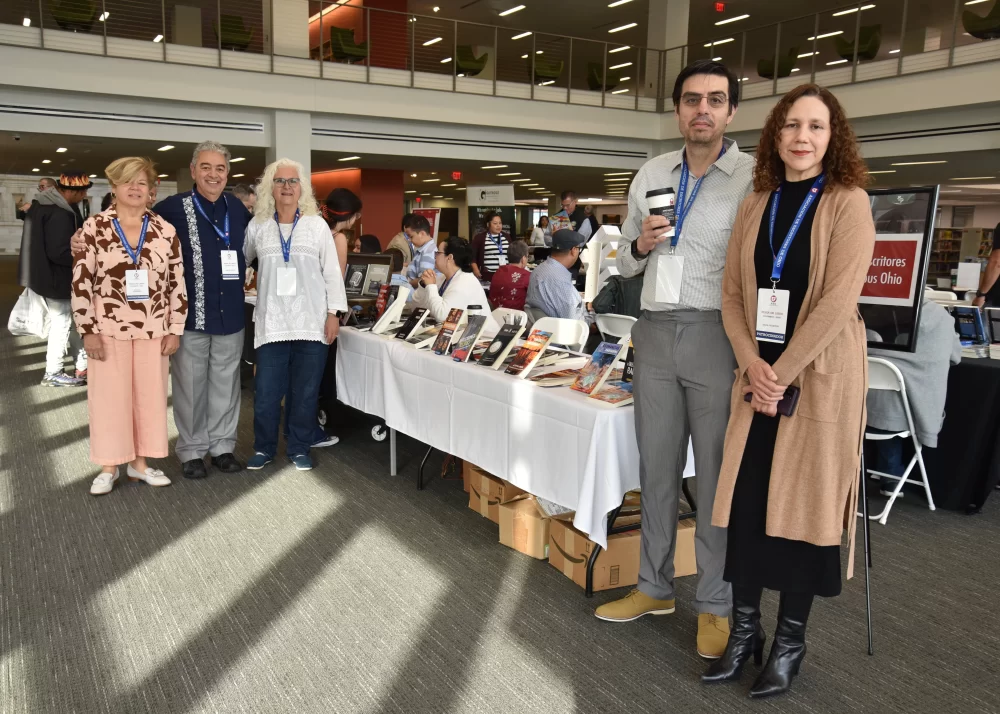
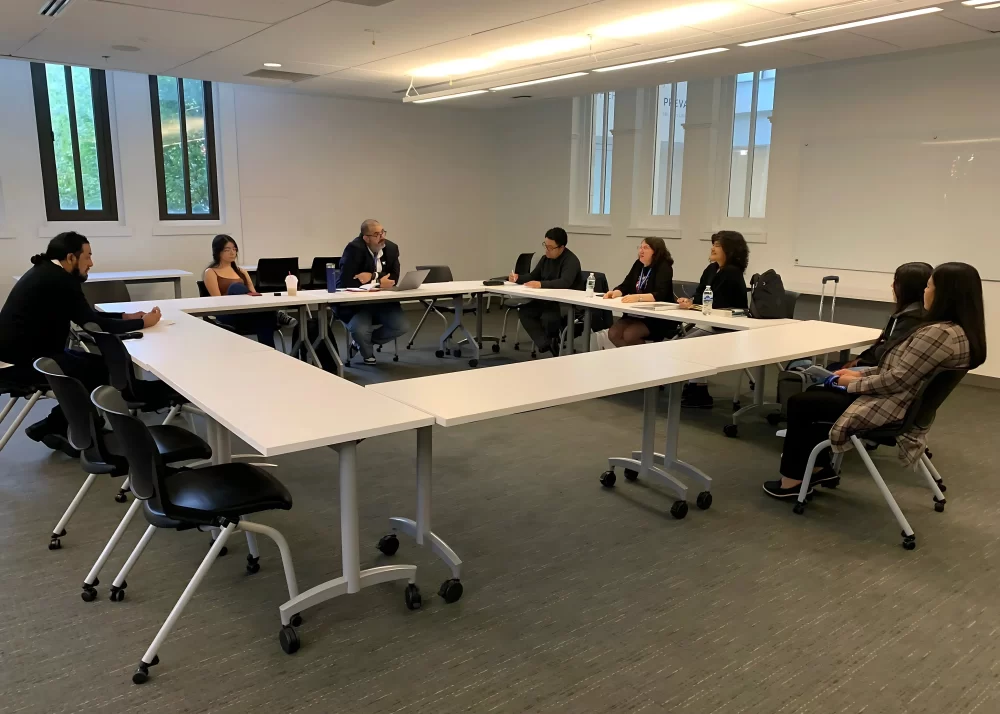
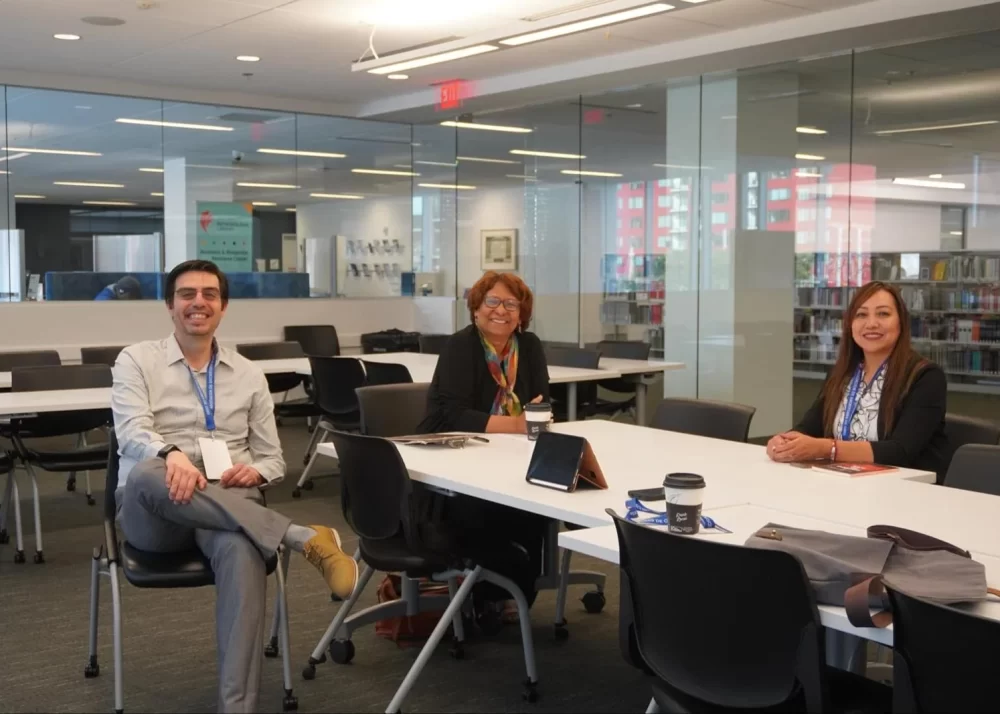
Highlights of the 2024 Book Fair
Moments, dances, panel discussions, and event presentations.
Featured Image
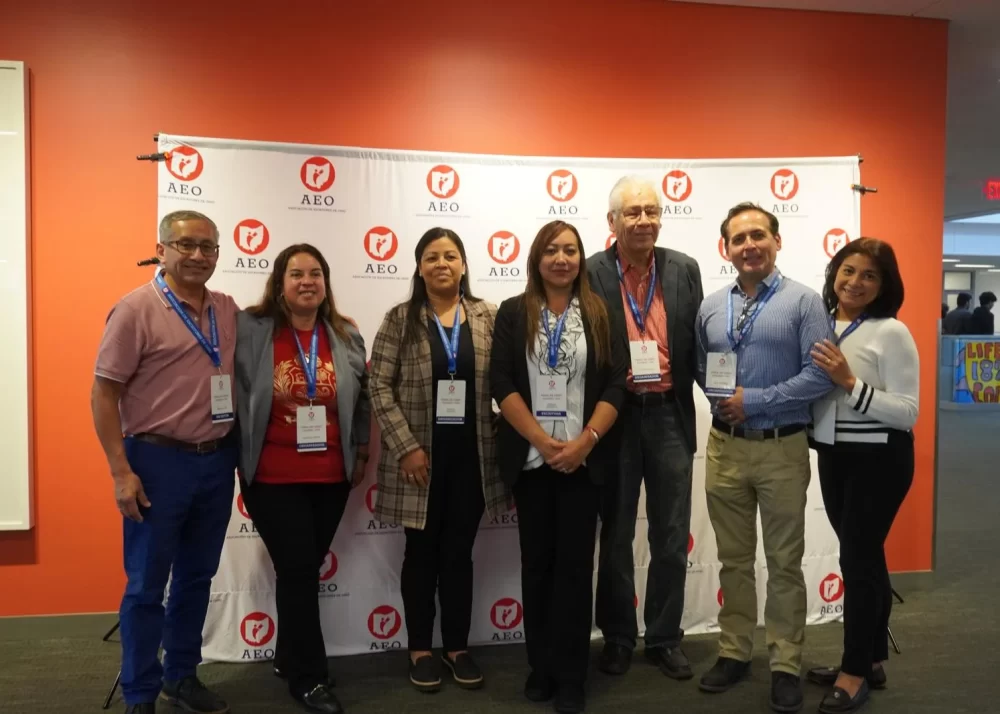
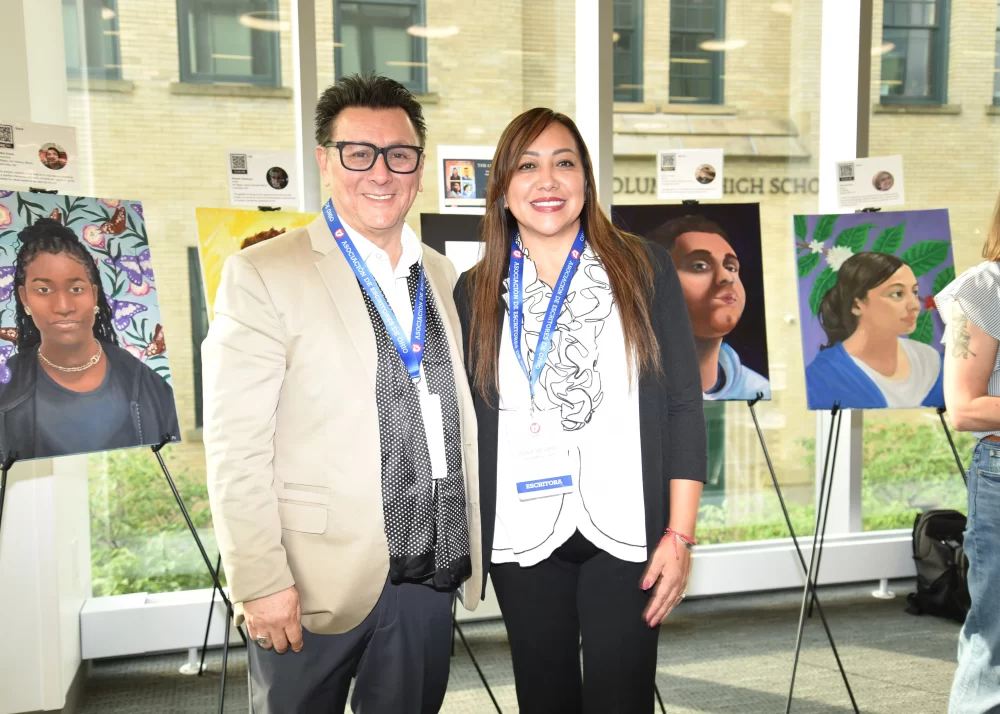
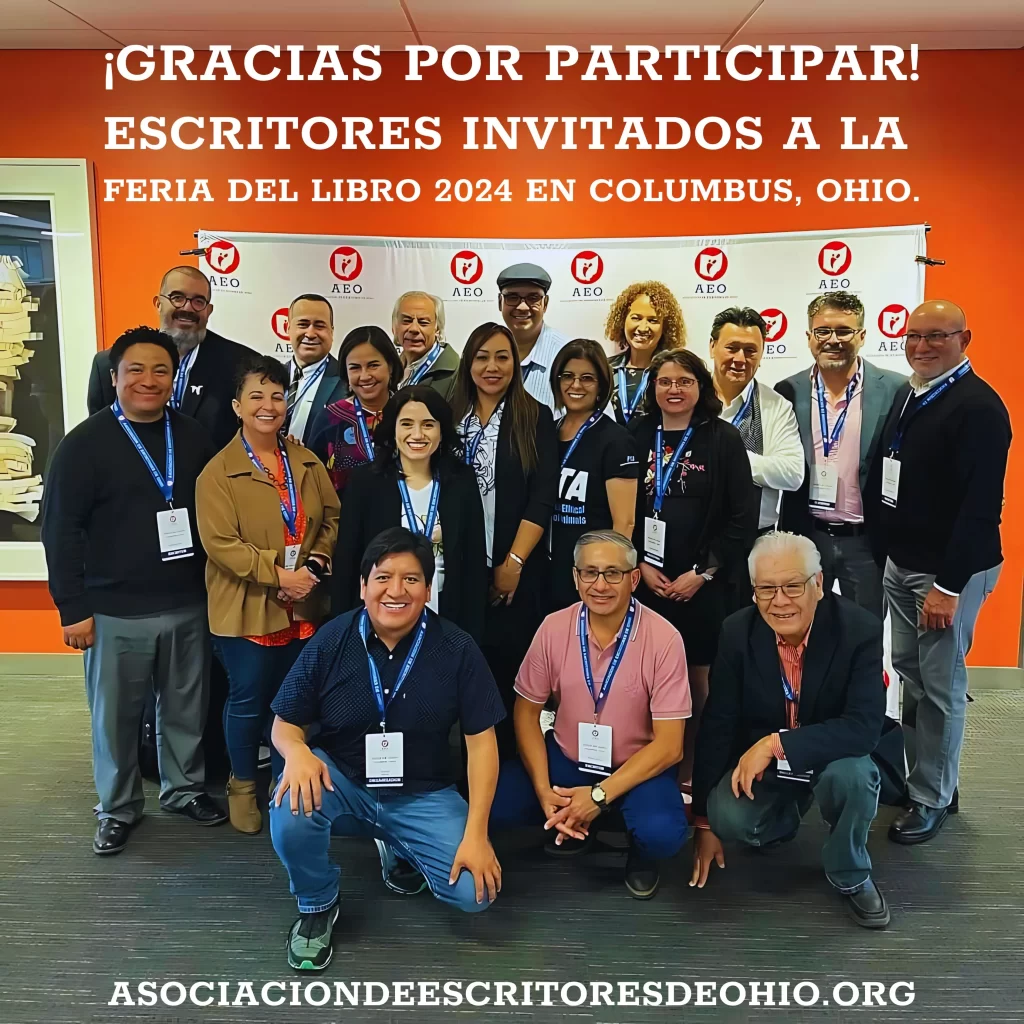
Guest Writers 2024
We thank all participating authors and collaborators who made this great edition possible.
HISTORY & TRAJECTORY
Other Book Fair Editions
Explore the history and memory of our past and future editions.